

Toad in the hole is one of those comforting British classics that evokes the coziness of family dinners, Sunday roasts, and cherished moments shared around the table. But have you ever stared at your dish and wondered why the batter didn’t rise or why it lacked that crispy snap? This recipe is knocking down all those doubts by diving deep into the secrets behind a perfect rise and the crispiest batter you’ll ever master. From the type of sausage to the science of batter consistency and oven technique, this guide unlocks the charm of Yorkshire pudding goodness encasing juicy sausages, baked to golden glory. Be prepared to dazzle with your next meal!
Getting Toad in the hole right takes more than just throwing ingredients together—it’s about timing, temperature, and technique working in perfect harmony. The batter needs rest, the pan must be blazing hot and filled with just the right amount of fat, and the right sausages set the flavor stage for a true culinary knockout. Lucky for you, the hard-earned wisdom scattered across kitchens and test runs has been condensed right here. Think bubbling fat that crackles as the batter hits, a puffed crown of golden Yorkshire pudding batter, and the lovely aroma of sausages searing through the house—that’s the magic in the making. Ready to learn how to bring that magic home?
Whether you’re a seasoned cook eager to up your game or a beginner fascinated by the mysteries of this traditional dish, you’re in the right spot. Alongside clear steps, you’ll get tips, troubleshooting tricks, and even ideas for accommodating diets that vary from gluten-free to vegetarian. And just wait until you get a glimpse of the joy it brings when your guests marvel at that majestic puff and crispy edges. Let’s take it step by step and make your next Toad in the hole recipe impressively perfect! 🍽️✨
In brief:
- 🔥 Preheat your pan and fat thoroughly to get a sizzling hot base for pouring the batter, guaranteeing crispness.
- ⏱️ Rest your batter for 30+ minutes to relax gluten and soak in moisture, enabling that legendary rise.
- 🌭 Choose high-fat pork sausages like Cumberland or Lincolnshire for juicy flavor and rendered fat.
- 🥄 Use equal volumes of flour, eggs, and whole milk for batter consistency that’s smooth and custardy inside.
- 🥄 Avoid opening the oven door mid-bake to prevent sudden temperature drops that collapse the batter puff.
what are the key ingredients that make toad in the hole rise to perfection?
Getting the batter and sausage foundation right is the biggest game changer. The secret weapon is a combination of simple staples—all-purpose flour, whole eggs, and full-fat milk—balanced to create the ideal batter consistency for that perfect rise and airy yet custardy interior.
Begin with flour. Not just any flour will do—sifted all-purpose flour is your best friend. The sifting aerates the flour, ensuring you won’t end up with bumpy lumps and helping the batter puff like a dream. In some circles, champions swear by brands like King Arthur or Gold Medal due to their consistent quality. Don’t underestimate the influence of good flour quality here, as it directly affects the texture and lift.
Eggs perform triple duty: they provide structure, moisture, and an elastic network that traps steam during baking, leading to that iconic puff. Room temperature eggs beat cold ones hands down for batter rise. Imagine whisking cold eggs—your batter can end up stiff, creating dense results. Let eggs sit out for about 10 minutes before you start.
Next up, milk. Whole milk with all that rich creaminess not only infuses flavor but also helps keep the batter tender and moist. Substituting skim milk will dry out the texture, while plant-based milks like oat or almond can work with some tweaks but won’t ride as high in the oven. The milk’s job? To bring everything together into a silky, pourable batter that’s just thick enough to cling to sausages but loose enough to rise beautifully. Rest assured, it’s the batter’s sauce.
Then come the seasoning essentials: a touch of salt, a pinch of baking powder, black pepper, and a little onion powder to deepen the flavor profile. These don’t just elevate taste but also influence the final texture, especially the baking powder, which acts as the little leavening agent superstar making the batter puff up dramatically.
The protagonist sausages deserve an honorable mention here. You want sausages with a high-fat content—traditionally Cumberland or Lincolnshire varieties—that will render out juicy fat, flavoring the batter and encouraging crisp edges. Low-fat sausages? They tend to dry out and can leave your batter soggy or lacking flavor. And don’t forget the browning step: pre-cooking sausages in hot oil until they’re golden ensures you get deep flavor plus fat ready to crisp that batter right.
Let’s put it in a handy table to spotlight the essentials:
| Ingredient 🌟 | Role in ToaD In The Hole 🍳 | Tips & Tricks 💡 |
|---|---|---|
| All-purpose flour | Creates structure and lift in batter | Sift before use for lighter texture |
| Whole eggs | Structure, moisture, elasticity for rise | Use room temp eggs for max puff |
| Whole milk | Moisture and tenderness | Full-fat preferred; adds richness |
| Baking powder | Leavening agent for puffing | Fresh is essential for rise |
| High-fat pork sausages | Juicy flavor and fat for crisp batter | Brown well before baking |
how to build the perfect batter consistency and why resting counts
It’s tempting to rush and pour the batter straight after mixing but don’t. What makes the batter’s consistency magical comes from one glorious step: resting—and plenty of it.
When you mix your flour, eggs, and milk, gluten strands begin to develop. This raw mixture is elastic, and if you bake it immediately, the batter might not puff properly or could be gummy. Letting the batter rest for at least 30 minutes does two wonderful things:
- 🎯 First, it allows the flour to absorb the liquid completely, creating a smooth, cohesive batter.
- 🎯 Second, it lets gluten relax, so your batter won’t fight back during baking and will rise with a tender crumb instead of turning tough.
Think of the resting phase like giving your batter a beauty sleep. During this time, the batter gains strength and confidence to puff sky-high in the oven, creating that iconic Yorkshire pudding silhouette. Plus, if you have patience (and why not!), letting it rest overnight in the fridge only improves the texture. Just bring it back to room temperature before baking—it reacts best when not stone cold.
Consistency-wise, the batter should be similar to heavy cream: smooth, pourable but not runny. If it’s too thick, add a splash more milk. Too thin, and you risk a flat result. Work with controlled whisking—not too much or you’ll knock out all the air, but enough to create a lump-free, velvety batter that spreads evenly over your pre-browned sausages.
For anyone still adjusting their ratios, here’s a quick checklist to hit that perfect batter consistency before resting:
- Use room temperature eggs and milk to encourage smooth blending.
- Whisk gently until the batter is lump-free but still aerated.
- Check the pour; aim for thick cream, able to coat the back of a spoon.
- Cover and rest for 30 minutes minimum at room temp or overnight in the fridge.
This step often separates a just-okay toad in the hole from one that commands second helpings. Seriously, it’s worth that wait. After all, who doesn’t love a silky, puffed, and golden meringue-like crust giving way to tender sausage bites? Rest your batter and watch the magic happen!
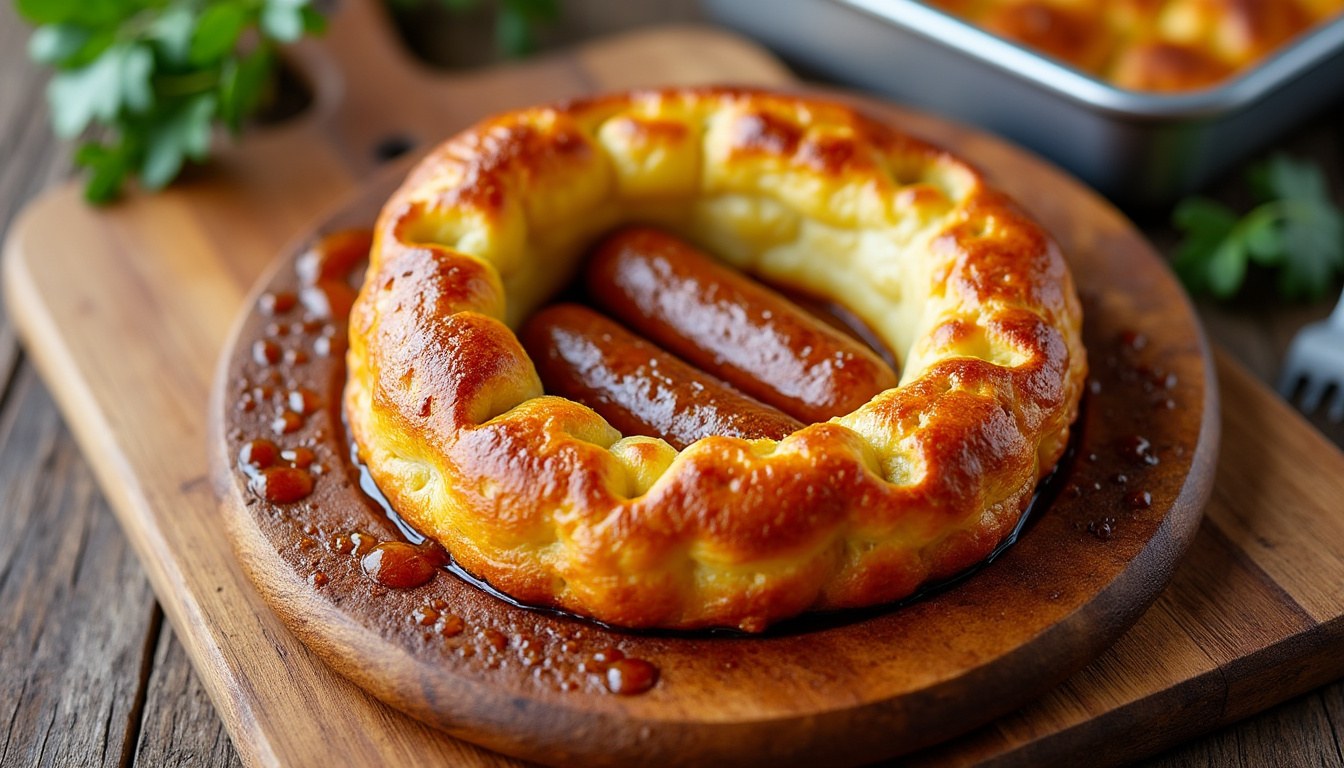
what role does oven temperature and hot fat play in creating crispy batter?
Even the best batter can flop without the right oven conditions. Heat is king when it comes to getting a commanding rise and crispy edges on your toad in the hole. The secret? A screaming hot oven and piping hot fat for the batter to leap into.
The go-to temperature is a precise 425°F (220°C). This flames the batter from the moment it hits the pan, turning the starch in the flour into delightfully puffed layers of golden delight. But temperature alone isn’t the star; the heat working together with the sizzling fat is what delivers that signature crisp bottom and edges.
Speaking of fat, the choice here can be a subtle but impactful difference. Traditionally, beef dripping reigns supreme—rich, savory and with a high smoke point that withstands the oven’s heat. Don’t have beef dripping? Vegetable or canola oils step up admirably, offering a neutral flavor and similar crisping effects. Butter? Nice for flavor but it burns too fast under these temperatures.
Before pouring your batter, you have to render the fat properly by browning sausages in it and putting the oily pan back in the oven to get it smoking. When that batter hits the pan, if you hear a loud sizzle—a gratifying pop and crackle—you’re on track for crispy success.
Here’s the deal broken down:
- 🔥 Heat the pan and fat in the oven for at least 10 minutes at 425°F so it is shimmering and almost smoking.
- 🔥 Add the batter quickly to avoid losing heat, to hear that sizzle, and create an instant crust.
- 🔥 Bake without opening the door for 25–30 minutes to preserve rising steam and heat.
Ignore the temptation to peek! Opening the oven door mid-bake releases precious hot air, which will cause your puff to collapse faster than you can say Yorkshire pudding. Just picture a glorious risen batter with crispy golden edges and an eggy, custard-soft middle—absolute perfection.
While cast iron and steel roasting pans are ideal—trapping and radiating heat long after the oven door opens—glass or ceramic don’t get hot enough quickly and tend to give a soggy base, which is a classic pitfall for many wannabe Toad in the hole champions.
To sum it visually, here’s a simple guide for oven temp and fat types in 2026 kitchens:
| Fat type 🍳 | Flavor profile 🌿 | Smoke point (°F) 🔥 | Effect on batter |
|---|---|---|---|
| Beef dripping | Rich, savory, traditional | ~400+ (high) | Best crisp, authentic flavor |
| Lard | Clean, porky fat | ~370 (high) | Great crispness without beef taste |
| Vegetable oil | Neutral | ~400+ (high) | Crispy, balanced, modern substitute |
| Butter (not recommended) | Rich but burns easily | ~300 (medium) | Tends to burn at high temp, less crisp |
what quick tips can ensure your toad in the hole is crispy, golden and elevated?
Tackling the perfect toad in the hole can be daunting, but nailing a few simple tips can make you kitchen royalty. These nuggets of wisdom come from hours washing up and re-testing recipes, but now you get to skip the pain and jump straight to glory!
- 🌟 Never pour the batter into a pan that’s not super hot. When you pour, you want it to sizzle—no sizzle, no rise.
- 🌟 Don’t overmix your batter. Whisk enough to remove lumps but no more. Too much mixing equals dense, flat batter.
- 🌟 Rest the batter for at least 30 minutes.
- 🌟 Avoid the temptation to open the oven mid-bake—resist! Your puff depends on the stable, hot environment.
- 🌟 Use fresh baking powder; old powder is one of the silent killers of a perfect rise.
- 🌟 Prick sausages lightly before pre-cooking to avoid unexpected bursts of fat that can ruin batter texture.
- 🌟 Finish with fresh herbs like thyme or rosemary to brighten the savory richness.
And if you’re adjusting for different diets, here’s a quick guide:
- 🌱 Substitute pork sausages with vegetarian versions like Beyond Meat for a plant-based treat.
- 🌾 Use gluten-free flour blends with xanthan gum for gluten-free batter that still puffs nicely.
- 🥛 Dairy-free lovers, swap whole milk with unsweetened almond or oat milk and butter with vegetable oil—texture might change but flavor stays.
One last thing: crisp edges are often judged by sound just as much as by sight. That delightful crunch that breaks with a snap is the hallmark of success. Sizzle, puff, crunch—repeat!
Here’s a fantastic video that breaks down the steps visually to perfect your crispy batter—because no one wants soggy toad! You’ll see how the batter hits that hot fat and rises before your eyes.
And let’s not forget the Yorkshire pudding connection! This video dives into the batter science and how that perfect puff is the cornerstone for toad in the hole success. Perfect for anyone craving those golden, clouds of crispy joy.
Why is it important to rest the batter before baking?
Resting lets the flour hydrate fully and gluten strands relax, creating a smoother batter that rises better and bakes up tender and airy.
Can I use chicken or vegetarian sausages instead of pork?
Yes! Chicken or vegetarian sausages work fine but expect slightly less fat rendering, which might reduce crispiness slightly. Ensure to brown them first.
What causes toad in the hole batter to collapse after baking?
Opening the oven door mid-bake, cold batter, or insufficient hot fat are the most common causes. Avoid these to keep your rise stable.
How can I make my toad in the hole gluten-free?
Use a 1:1 gluten-free flour blend with xanthan gum to mimic the structure of wheat flour. The batter will puff a bit differently but remains delicious.
What’s the reason for the crispy batter edges?
Crisp edges form when batter hits hot fat and high oven heat dries the surface quickly, creating that signature golden crust with crunch.
In the overall scheme, mastering the toad in the hole is a delightfully doable culinary adventure when you respect the batter’s rest, the sausage’s quality, and a hot oven. And hey, it’s a dish that brings smiles, fills the bellies, and wraps you in nostalgia with every crispy bite. Thanks for sticking through this delicious journey!
Here’s a sweet little thought to wrap up: “Cooking isn’t just a skill, it’s a love letter you send through every meal.” ♥️
