

When kitchen clutter feels like a daily battle, finding the right dish drainer can transform the way you dry and organize your dishes. The age-old countertop dish rack has comfortably held its spot in kitchens for decades, but newer, more innovative wall-mounted options are now stealing the spotlight. Both have their perks, and the decision between the two isn’t just about looks — it’s about functionality, hygiene, and kitchen organization in your unique space. As kitchens get more compact and our lifestyles demand quicker, cleaner solutions, these drying accessories have evolved in clever ways we can’t ignore. Ready to dive into the pros and cons of countertop versus wall-mounted racks? Let’s unpack the dish drainer dilemma! 🍽️✨
In brief:
- 🥢 Countertop dish racks offer ample capacity and are easy to relocate but consume valuable kitchen real estate.
- 🛠️ Wall-mounted dish racks maximize vertical space and reduce countertop clutter but require installation and a more permanent setup.
- 💧 Efficient drainage systems prevent stubborn water pooling, promoting hygiene and cleaning efficiency.
- 🧼 Material choice impacts durability and maintenance, with stainless steel and silicone leading in longevity and cleanliness.
- 📐 Proper sizing and fitting to your sink and kitchen layout are essential to avoiding faucet interference and maximizing drying space.
- 🎥 Interactive videos below showcase installation tips and space-saving hacks for both types of dish drainers!
what types of dish drainers fit your kitchen organization style?
Understanding the types of dish drainers available is a must before making a choice. The term ‘dish drainer’ broadly captures any accessory designed to hold washed, wet dishes and let them air dry—something that many regard as an unexciting staple but truly shapes kitchen orderliness.
The classic countertop dish rack remains the most common choice. These racks sit right on your kitchen counter, usually with their own legs or base, making them easily movable and accessible. For a busy family kitchen, these are often a go-to option because they can hold quite a load—think 10-15 plates, several cups, bowls, and an integrated utensil holder. Yet, they aren’t exactly space ninjas; in smaller kitchens, they gobble up precious counter real estate that could be better used for prepping food. And don’t get me started on the water puddles that seem to occupy their trays endlessly! 🍽️💦
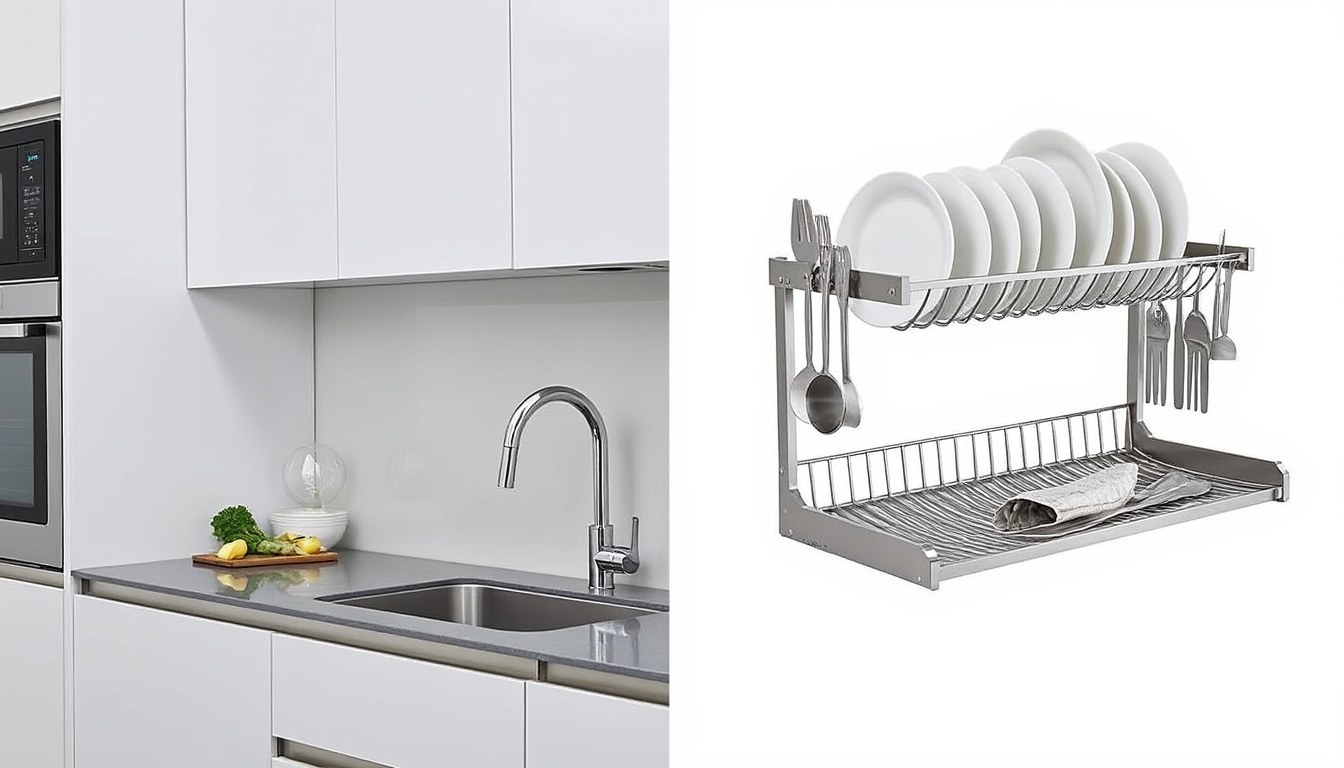
Another rising star is the wall-mounted dish rack, an absolute hero when it comes to saving counter space. These racks are fixed to your kitchen wall, freeing up your surfaces while still keeping your dishes within arm’s reach. Perfect for those who live in compact apartments or simply prefer a clutter-free aesthetic, wall-mounted racks often come with sleek drainage systems that send water directly into the sink, bypassing the need for messy trays. However, they usually require installation tools and a spot sturdy enough to hold wet plates, cups, and cutlery, so a bit of upfront planning and DIY spirit is essential.
Other rack options include over-sink racks that blend well for single or double sinks, draining water directly without pooling, and foldable models ideal for campers or minimalists. If you ask me, evaluating the kitchen layout, your typical dish load, and how flexible you want your drying setup to be can make all the difference in your choice.
- ✨ Countertop racks: great capacity but take space
- ✨ Wall-mounted racks: space-saving and modern
- ✨ Over-sink racks: direct drainage, grip limited space
- ✨ Foldable racks: portable, low capacity, easy storage
how do materials and hygiene impact your dish drainer choice?
Picking the right material isn’t just about style—it’s a hardcore practicality game, especially when hygiene is on the line. Kitchen accessories designed for drying dishes face constant wetness; without the right surface, they can quickly grow unwelcome guests like mold or rust.
Stainless steel tends to be the heavyweight champion here. Grade 304 stainless is lauded for its rust resistance and sleek, industrial vibe. Families with heavy daily dish loads swear by these racks for their durability and ease of cleaning—the water just beads and runs off. But beware lower-grade stainless steel—it’ll try to play a rusty trick on you if you’re not careful.
Then there’s coated steel, where powder-coated finishes protect the metal underneath. These racks can pack some punch in aesthetics with colors and finishes but need a delicate touch because chips expose metal to moisture, accelerating rust. Chrome-plated options gleam but scratch easily and start rusting under the surface cracks—think of them like fragile yet charming divas. 🛡️🌈
More eco-friendly vibes come from bamboo or wooden racks, perfect for warm kitchen aesthetics and those leaning into sustainability. Be warned, though! Wood has a mind of its own and can mold if left damp. You’ll need to air these racks out and treat them with care to keep them smelling fresh and looking pretty.
For those loving silicone’s flexibility, especially in roll-up over-sink racks, it’s like a hygienic dream: dishwasher-safe, stain-resistant, and resistant to mold. Just make sure you grab BPA-free plastics for lightweight and rustproof options, although these might warp or hold odors over time.
Consider this table for a quick glance at pros and cons of popular materials:
| Material 🛠️ | Pros 🌟 | Cons ⚠️ | Typical Lifespan ⏳ |
|---|---|---|---|
| Stainless Steel | Durable, rust-resistant, sleek, heavy loads | Expensive, heavy, cheaper grades rust | 5–10 years |
| Powder-coated Steel | Colorful, good rust protection | Chips, rust if damaged, harder cleaning | 2–5 years |
| Bamboo/Wood | Eco-friendly, warm look | Mold risk, needs drying, crack risk | 2–4 years |
| Food-grade Silicone | Flexible, dishwasher-safe, mold-resistant | Can stain, less rigid | 1–3 years |
| BPA-free Plastic | Lightweight, rustproof | Warps, holds odors | 1–3 years |
Remember: a drainage system that gets water flowing efficiently and rack designs that maximize airflow trump a fancy finish stuck in a puddle of water. Wetness is the enemy — avoid stagnant water collections and you’ll keep your drying dishes healthier and your rack far more inviting. 🍋🧽
how to size and fit a dish drainer perfectly in your kitchen?
Nothing ruins a zen kitchen vibe like a dish drainer that doesn’t fit—either wobbling precariously or blocking your faucet mid-wash. Sizing up your rack and matching it with your sink and kitchen layout is crucial to harmonious kitchen organization.
Start with measuring the sink width and depth precisely—your sink’s outer edges and the basin’s front-to-back space set the maximum rack footprint. Single-bowl sinks love wide, expansive racks, while double-bowl setups might benefit from modular or split racks that save space and adapt nicely. Pay attention to the rim-to-faucet distance, too! Over-sink racks need 4+ inches from faucet base to avoid awkward clunks and rinse interference.
If you have a farmhouse apron sink, rack feet with anti-slip pads make life easier, and for undermount sinks, consider the inner flange drop to get a seamless fit.
Pro tip: measure the clearance from your countertop back edge to the faucet, especially if you have a pull-down spray or soap dispensers nearby. Sometimes a narrower or foldable rack is a better idea than cramming a bulky one that intrudes on your washing choreography.
Use the quick checklist below before shopping:
- 📏 Sink width and depth
- 📏 Bowl sizes and configuration (single/double)
- 🛠️ Rim-to-faucet and faucet-to-wall distances
- 🏠 Countertop overhang and lip measurements
- 🍽️ Typical family dish load and frequency
- 🎯 Clearance and workspace needs
Picking the rack size that fits your lifestyle often boils down to capacity: a family drying up to 8 place settings will want about a 15-20” rack, while casual singles might get by with something smaller and simpler.
how do installation and space-saving features boost drying dishes effectiveness?
Getting your new dish drainer in place isn’t just about screwing it onto the wall or plopping it on the counter—it’s about how installation and design improve your kitchen’s daily hustle. Let’s take the wall-mounted rack as the game changer here, often heralded for turning cramped countertop chaos into a zen-like clear zone.
Wall-mounted racks usually require tools, some DIY skills, and a steady hand. You’ll want to mark holes precisely with a level, use wall anchors so the rack can handle up to 40 lbs (or more!), and mount it past splash height for easy access. Keep in mind, once installed, these racks are pretty permanent, so plan carefully to avoid repositioning headaches.
Over-sink roll-up racks? Easier! Just unroll them across your sink, ensure the silicone ends grip your counter well and keep the bars parallel so utensils don’t take a dive. Expandable varieties adjust but beware overtightening clamps on composite sinks to avoid damage.
Countertop racks? Set on flat surfaces near your sink exit, and for a pro touch, put silicone protectors or drip trays underneath. These little details prevent sliding and avoid wasted water puddling. For frequent entertainers, consider multi-tier racks that stack plates in levels for max capacity while preserving airflow. 🥂🥄
- ⚙️ Wall-mounted: solid installation, keeps counters clear
- ⚙️ Over-sink roll-up: quick setup, fold-away convenience
- ⚙️ Countertop: best capacity, could crowd precious space
- ⚙️ Accessories: drip trays, silicone feet, drain hoses
Organizational tact counts too: upright plates to airflow, cups upside down on pegs, cutlery separated in holders. A well-thought setup dries faster, prevents bacteria, and makes kitchen chores way less of a drag.
how to care for and maintain your dish drainer for long-term value?
Whatever your rack choice, cleaning efficiency determines how long it stays shiny and hygienic. Daily worry-free wipe-downs prevent lasting watermarks and food bits, but deeper weekly scrubs are a must, especially for hidden crevices and under trays.
Stainless steel racks flourish with vinegar and baking soda scrubs, bamboo wants gentle hand washes and occasional oiling, while silicone accessories are dishwasher superstars. Be cautious with coated steel: inspect regularly for chip damage to avoid rust creeping in like an unwanted guest.
Seasonal maintenance is where many folks drop the ball, yet a simple de-scaling soak or rust spot treatment with baking soda can prolong your drainer’s life dramatically. Sanitizing racks after sickness or flu prevents unpleasant rematch battles with bacteria, benefiting everyone in your household.
Got a moldy tray or stubborn drain channels? Flushing with hot water and a gentle scrub usually does the trick! And if your rack rocks or smells funky, non-slip pads or thorough drying are your new best friends.
Here’s a quick rundown for dish drainer care:
- Daily dry wipe to avoid water stains
- Weekly soak and brush to keep mold away
- Monthly sanitize with diluted bleach or vinegar
- Seasonal rust check and descaling
- Replace worn parts if necessary
Keeping your dish drainer clean isn’t just a chore, it’s part of a smart kitchen hygiene routine that keeps your dry dishes fresh & safe—even my friend Jamie swears by it after battling mildew mishaps! So spritz up that cleaning schedule and watch your kitchen accessories shine bright.✨🍽️
How often should I clean my dish drainer to prevent mold?
It’s best to wipe your rack daily and perform a thorough cleaning weekly to keep mold and bacteria at bay.
Is a wall-mounted dish rack harder to install than a countertop one?
Generally, yes, because wall-mounted racks require drilling and leveling, whereas countertop racks are usually plug-and-play.
Can bamboo dish racks be hygienic?
Absolutely! Bamboo racks are safe if dried properly after each use and sanitized monthly to avoid mold growth.
What material is best for easy cleaning and durability?
Stainless steel ranks high for durability and sanitation, while food-grade silicone offers easy cleaning and mold resistance.
Which dish rack is better for small kitchens?
Wall-mounted or over-sink roll-up racks are excellent space-saving solutions for tight kitchen layouts.
In the end, picking between a countertop dish rack and a wall-mounted version is less about fashion and more about how your kitchen breathes, moves, and feels. It’s a balance of convenience and style, accessibility and tidiness. Here’s a quirky thing: did you know that the earliest dish drying racks date back to the early 20th century, evolving alongside our obsession with kitchen gadgets? Embracing new designs feels like being part of that ongoing kitchen revolution! 👩🍳🍴 Thank you for hanging out and reading through this deep dive on drying dishes—may your kitchen stay tidy and your dishes always shine. Keep those dishes dry and spirits high! 🌈✨
