

The magic behind a convection oven lies in its ability to deliver perfect even cooking by harnessing the power of air circulation and superior heat distribution. Whether you’re roasting a Sunday chicken or baking your favorite cookies, mastering the quirks of convection baking unlocks a world of crispier textures, faster cooking times, and consistent results. The science is simple but the practice? Oh, it’s a game changer in 2026’s busy kitchens! Imagine not having to constantly rotate trays or fear that the cupcake on the edge is underdone while the center is over-baked. Convection ovens make that a reality by pushing hot air evenly across all surfaces of your meal — a feature that’s not just a neat kitchen trick but a genuine cooking secret for next-level dishes.
Yet, despite their rising popularity—especially with the growing demand for energy-efficient appliances—convection ovens require some savvy cooking strategies. It’s not just about cranking up the temperature or timing your bake the same way you would in a traditional oven. Novices often find themselves puzzled by the faster cooking times and the need to tweak recipes. Seasoned pros, however, understand that with temperature control and clever use of bakeware, you can make any dish shine—with that coveted crispy texture or that perfectly moist bite. On top of that, convection ovens save time and energy, which anyone who’s juggled work, family, or meal-prep can appreciate. Ready to dive into the secrets of perfect brilliant meals? Let’s get that oven fan whirring!
In brief:
- 🔥 Convection ovens provide faster and more even cooking through powerful air circulation.
- 🌡️ Lower the temperature by about 25°F to avoid overbaking and burning.
- 🍽️ Use thin, metal pans with flat bottoms for best heat distribution and avoid overcrowding.
- 🕰️ Keep a close eye on baking times—they’re generally shorter in convection ovens.
- 💡 Proper rack positioning and cookware choice optimize oven efficiency for amazing results.
- ✨ Bonus: Convection ovens save energy and reduce cooking times by up to 25%.
how convection ovens enhance even cooking through air circulation
You might wonder, what exactly sets convection ovens apart from their standard counterparts? The answer — a fan and an exhaust system. This dynamic duo circulates hot air at lightning speed across every inch of your food, ensuring each bite is cooked uniformly. No more battling dry edges with raw centers! Understanding this mechanism is the first step in taming the beast.
The fan blows heated air throughout the interior, preventing hot and cold spots—often the bane of conventional oven baking. Imagine cooking multiple trays of cookies simultaneously, and every single one comes out golden brown with a perfect crispy texture. It’s not just a happy accident but the magic of heat distribution. This continuous air movement accelerates evaporation of moisture on food’s surface, yielding tantalizing, crisp exteriors while sealing in juicy flavors inside.
Although this sounds like a dream for bakers and roasters, it demands attention. Overcrowding your oven can choke that airflow, leading to uneven results. So, keep the space breathing! For best outcomes:
- Install racks in the middle or lower zones to harness steady airflow.
- Utilize shallow pans to allow heat to envelope the food fully and move freely.
- Avoid stacking trays too close; neat spacing means no cold pockets.
Embracing these principles can transform your cooking, minimizing guesswork and letting the oven’s smart circulation work its charm. In fact, enthusiasts rave about the easy roasting techniques for meats and vegetables with the dull drum of fan-assisted heat spreading evenly—no need for frequent rotations. This evolved method elevates kitchen game to new heights while conserving energy, a win-win in this age where sustainability pairs with efficiency.
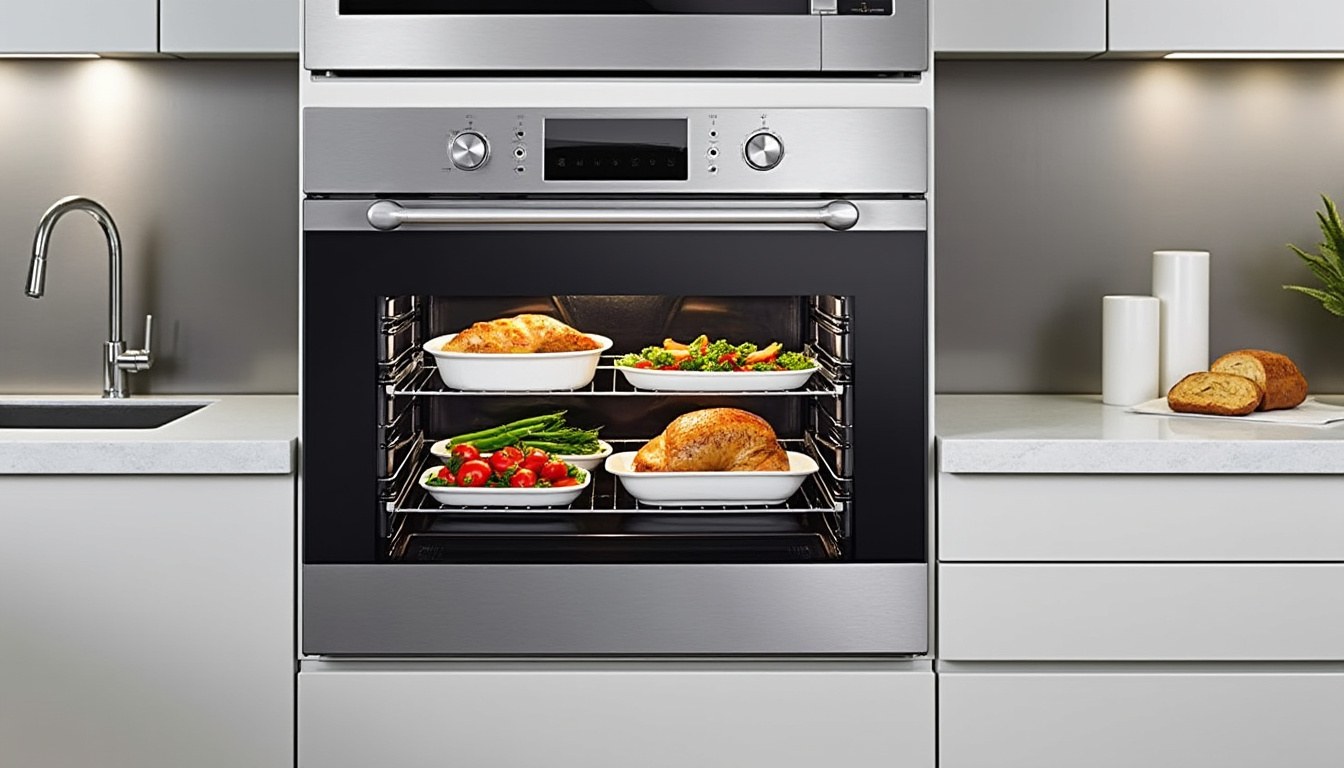
why tweaking temperature and timing matters in convection baking
One of the most common pitfalls with convection ovens? Using the same settings as a traditional oven. Spoiler alert: It just won’t work 🤦♂️. Since the fan slashes cold spots and bakes faster, it’s crucial to adjust. The golden rule is to lower your recipe’s temperature by roughly 25°F (about 15°C). For example, if a classic cake calls for 350°F, dial down to 325°F for your convection oven. This tweak prevents burnt edges or an overly dry crumb, keeping your bakes spot-on.
But hold on — timing also deserves recalibration. Because hot air whips around inside, dishes cook up to 25% quicker. This means you should peek at your food earlier, say 5 to 10 minutes before the usual finish time. Trusting the oven blindly here? Risky business. Opening the door frequently isn’t great either as it disturbs the air stability — so keep a weather eye from the oven window, or better yet use a smart thermometer with alerts. Cheap tricks? Nope, just savvy temperature control in action!
Not all baked goods react the same either. Delicate items like soufflés or certain cookies might want gentler heat or shorter exposure, while roasting a chicken thrives with the fan’s quick airflow. Learning these subtleties turns a convection oven from a curious kitchen gadget into a precision tool for culinary excellence.
| Food type 🍗 | Temp adjustment (°F) 🌡️ | Timing adjustment ⏰ |
|---|---|---|
| Cookies 🍪 | Lower by 20-25°F | Reduce by 2-5 minutes |
| Roasts 🥩 | Lower by 25°F | Check 10-15 minutes early |
| Breads 🍞 | Lower by 25°F | Reduce by 10 minutes |
| Soufflés 🥄 | Lower by 15°F | Monitor carefully, faster cooking |
The right combos of heat and timing unlock tasty, consistent bakes—even in a brand-new convection setup. Many chefs stress experimentation, which over time builds intuition about their individual oven’s quirks for that perfect golden crust or moist center.
choosing the best cookware to optimize heat distribution
Cooking with the right tools really elevates the convection oven’s inherent strengths. Thin metal pans with flat bottoms are the rock stars for even cooking because they heat and cool quickly. Their responsiveness syncs beautifully with the nickel-and-dime shifts in oven temperature and air flow.
Glass or ceramic bakeware? Well, those tend to lag behind in heating speed and often cause troublesome uneven browning in the fan environment. The lesson? Stick with lightweight metal to get that reliable, uniform bake every time.
Here’s a nice bonus—using shallow pans plays a double role. It allows heat to hug your food fully and maximize air circulation around your meal. Deep tins might shield the top layers from direct heat and cause undercooked pockets, which nobody wants. Proper placement also matters hugely:
- Middle rack for most baking tasks.
- Lower rack for larger roasts to avoid overbrowning.
- Top rack when quick crisping is desired, like for flaky pastries.
Having the right bakeware set can become your secret weapon. A popular favorite is the Chicago Metallic Professional 4-Piece Non-Stick Toaster Oven Set, specially designed for convection style cooking. It’s durable, offers even heat flow, and easy cleanup with its non-stick coating—perfect for busy kitchens where efficiency counts.
how to embrace roasting techniques for crispy texture and mouthwatering results
Roasting is where convection ovens really flex their muscles. Thanks to that whirling hot air, you get this fantastic crispy texture on the outside while the inside stays juicy and tender. Imagine biting into a roast chicken with irresistibly golden skin that cracks delightfully under your fork, or vegetables caramelized to perfection with a slight char.
Here’s the catch: managing rack placement and letting that air work its magic is key. For roasting success:
- Don’t overcrowd the pan—give those flavors and hot air room to dance.
- Use shallow roasting pans that encourage even cooking.
- Rotate pans if you’re baking multiple items, but less frequently than conventional ovens.
- Rest roasted meats after cooking to let juices redistribute fully; convection cooking retains moisture well, so this is easier than you think.
In 2026, chefs and home cooks alike swear by convection ovens for holiday roasts and meal preps. The convenience saves a ton of time without sacrificing taste or texture. Curious about the best ovens on the market? Check out trustworthy recommendations on built-in ovens and how they fare in real kitchens.
how convection oven efficiency saves time and energy in busy kitchens
Let’s talk about oven efficiency because in 2026, it’s not just about cooking well but doing it smartly! Convection ovens cut cooking times by up to 25%, which is huge when you’ve got back-to-back meals or a busy family dinner. By circulating hot air continuously, they reach desired temperatures faster and more evenly, reducing the need for long preheating.
This translates into significant energy savings, not to mention less heat spent in your kitchen—which, let’s face it, can be a blessing during summertime. It’s this combination of speed and sustainability making convection ovens the darling of modern appliances. Imagine reducing your energy bill while still enjoying that perfectly roasted turkey or cookies with the crispiest edges!
Energy-conscious cooks appreciate that convection ovens consistently outperform many traditional ovens in energy consumption thanks to their advanced fan systems and smart design. Not only do they save power, but by cooking food faster and more evenly, they minimize the risk of wasted or ruined meals—another plus for your wallet and planet 🌍.
For those on the lookout to upgrade, diving into reviews like those on Electrolux ovens sheds light on top picks combining temperature control, air circulation, and smart cooking features—you know, all the bells and whistles to rock your kitchen routines.
Can I use a convection oven for all types of baking?
Absolutely! Most baking recipes can be adapted for convection ovens by lowering the temperature roughly 25°F and monitoring baking times carefully to avoid burning or drying out delicate goods.
How do I prevent uneven cooking when baking multiple trays?
Ensure proper spacing between trays to allow air circulation. Position racks in middle or lower zones and avoid overcrowding to achieve consistent heat distribution across all the items.
Are convection ovens more energy-efficient than traditional ones?
Yes! Thanks to their efficient air circulation, they cook faster and at lower temperatures, reducing energy consumption and cutting cooking time by up to 25%.
What are some common mistakes to avoid with convection ovens?
Raising the temperature too high, overcrowding the oven, and ignoring baking times can cause uneven cooking or burnt food. Avoid opening the oven door frequently to keep stable heat circulation.
How often should I clean my convection oven?
For optimal performance, clean your oven every 3 to 6 months, or more frequently if you use it daily. This prevents grease buildup that can hinder airflow and cause uneven cooking.
