

Adjusting the temperature on a mini fridge might sound trivial, but it’s actually a nuanced dance that impacts everything from your leftover lasagna to that beloved skincare serum sitting on the top shelf. Mini fridges are staples in dorm rooms, offices, and even small apartments, serving as compact guardians of freshness. Yet, many folks struggle to unlock their true cooling potential because they treat the temperature dial like a mystical black box. The reality? Getting the balance right is more about understanding your appliance’s quirks, environmental factors, and what exactly you’re popping inside. Whether you’re a college student nursing simple snacks or a skincare aficionado preserving sensitive serums, mastering temperature adjustment can save you from spoiled food and wasted products — and it’s easier than you think.
When it comes to mini fridge temperature control, the stakes are surprisingly high. The wrong setting invites bacterial parties that can ruin food safety and your peace of mind. Striking the perfect chill means creating an environment that’s just cool enough to slow down spoilage but gentle enough to avoid freezing damage. And yet, miniature size makes this task tricky, as temperatures tend to fluctuate more wildly compared to your kitchen’s full-sized fridge. Thankfully, with some savvy and the right tools, anyone can tame the temperature dial and boost their appliance’s efficiency. Couples, roommates, and skincare experts alike can glean quick wins from smart fridge maintenance and clever placement, ensuring their cooling levels stay in check without cranking the dial to the max.
In short — dialing in mini fridge temperatures is a blend of science, habit, and a pinch of artistry. Curious yet? Let’s dive deeper!
In brief:
- 🌡️ Optimal mini fridge temperature sits right around or just under 40°F (4°C) to keep items fresh and safe.
- 🔧 The temperature dial usually indicates relative cooling levels, so use a thermometer for precise adjustment.
- 🥤 Different items like beverages, dairy, and skincare need tailored temperature settings for best results.
- 🧼 Proper fridge maintenance and good airflow are key to stable and efficient cooling performance.
- 🔥 Avoid heat sources and give space around your fridge to improve energy efficiency and longevity.
why does mini fridge temperature adjustment really matter for food safety and energy use?
Dabbling in the temperature dialing of a mini fridge is not just about chilly drinks or fresh snacks — it’s a frontline battle against bacteria and wasted dollars. The innocent-looking temperature dial inside your compact fridge is actually a crucial fridge control, finely tuning your fridge’s climate to prevent microbes from thriving. See, when the fridge temp strays above 40°F (4°C), you’re inviting the pesky “danger zone” where harmful bacteria throw a wild party, accelerating spoilage and food poisoning risks.
Keeping the temperature just below that threshold slows bacterial growth dramatically and helps preserve the taste, texture, and nutritional qualities of dairy, meat, and those precious leftovers from last night’s dinner. But don’t just stop there! Setting the thermostat too low can backfire spectacularly. When temperatures dip beneath freezing (below 32°F or 0°C), you risk turning your dairy products into icy blocks and ruining your food’s delicate texture. Plus, over-chilling a mini fridge amps up energy consumption — more compressor run-time means higher electricity bills. It’s a delicate balancing act between food safety and energy efficiency.
Mini fridges are compact, meaning cooling levels swing more rapidly than in larger units. This requires most owners to revisit and fine-tune the temperature dial often. Maintaining a consistent temperature isn’t just a food safety best practice — it extends fridge lifespan by reducing stress on compressor parts, which is music to anyone who hates unexpected appliance repairs.
International food safety standards, such as the EU Regulation 853/2004, back this up with specific mandates: meat and fish stored at or below 4°C (39°F), dairy at or below 6°C (43°F), creating clear guides that manufacturers integrate into device design. This global push means you’re not just guessing — you’re operating within a science-supported safety framework.
Thanks to the rising importance of compact refrigeration in offices, dorms, and homes globally, these small appliances have become performance powerhouses when calibrated correctly. That fridge/freezer thermostat isn’t just there for decoration — it’s your first line of defense to keep things fresh, safe, and ready for your next snack attack or essential medication storage.
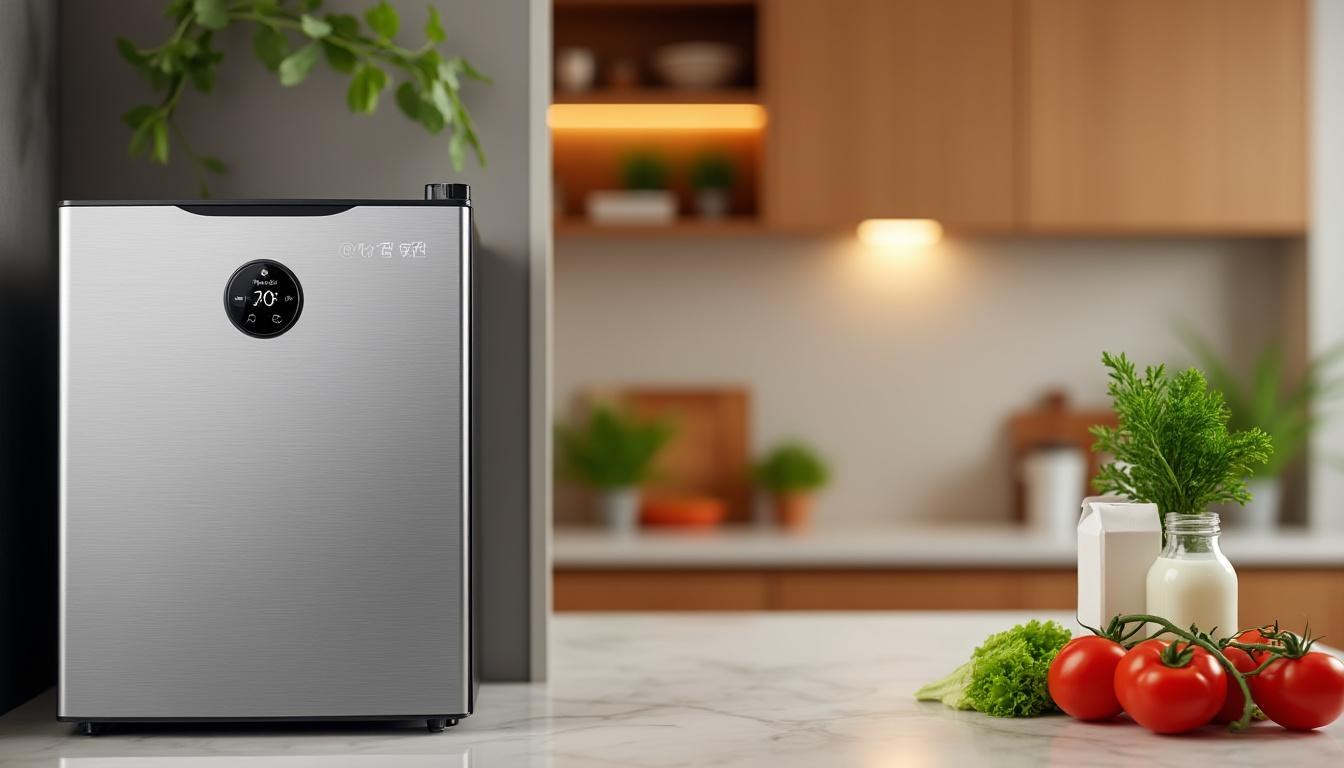
how to find the perfect cooling settings for your mini fridge contents?
One size doesn’t fit all when it comes to mini fridge settings. You can’t just flip the temperature dial willy-nilly and expect everything inside to behave. Imagine stashing fresh leafy greens right next to ice cream—you’ll quickly uncover that each item’s cooling needs differ wildly. So understanding what you eat and store is super important for dialing in the right temperature.
Usually, the sweet spot for general food safety hovers at or just below 40°F (4°C). This temp is the magic number that significantly slows down microbial mischief and keeps perishables like dairy, meat, leftovers, and ready-to-eat meals safe for longer periods. However, even within this range, there’s some wiggle room for specific items:
| 🥤 Item Category | 🌡️ Ideal Temperature Range (°F) | 🌡️ Ideal Temperature Range (°C) | 📝 Reason |
|---|---|---|---|
| Beverages | 34–38°F | 1–3°C | Perfectly chilled drinks without risk of freezing or cans exploding |
| Dairy & Perishables | 35–40°F | 1.6–4.4°C | Stay under 40°F for bacteria safety, preserving texture and taste |
| Ready-to-Eat Meals | 37–40°F | 3–4°C | Keeps leftovers safe with minimal risk of freezing ingredients |
| Skincare & Cosmetics | 40–45°F | 4–7°C | Preserves active ingredients by avoiding excessive cold damage |
| Medications e.g., Insulin | 36–46°F | 2–8°C | Maintains chemical stability, as per pharmacy guidelines |
Wanna get more precise? Don’t just rely on guessing the numbers on your fridge’s dial. Grab an appliance thermometer and track the internal temperature yourself — a little patience pays off big time. The process is simple: put the thermometer in a glass of water inside the fridge and check after sitting closed for 5-8 hours. Then, adjust the temperature dial in small increments until you hit the perfect cool spot for your stash.
Here’s a handy checklist for setting your mini fridge temperature dial correctly:
- 🧊 Start at a mid-range dial setting to avoid freezing or warming parts
- ⏳ Wait 5-8 hours after each adjustment for temperature to stabilize
- 🧪 Use an appliance thermometer in a glass of water for accurate reading
- 🔄 Make only small, incremental temperature adjustments
- 📅 Repeat checks regularly, especially if the room temperature changes
Understanding your fridge’s behavior with its thermostat and appliance settings goes hand in hand with regular fridge maintenance. This combo keeps your mini fridge humming happily, your snacks chilled just right, and your energy bills lower than ever.
what are the top tips to troubleshoot mini fridge cooling problems?
Mini fridge cooling problems can be a headache, but many issues are surprisingly easy to fix. If your mini fridge isn’t maintaining that sweet coolness, or worse—freezing everything—don’t panic just yet! These mini powerhouses have quirks, but most problems relate back to airflow disruptions, bad seals, or thermostat glitches.
If your mini fridge feels warmer than a summer picnic, start by checking the door seal. A loose or cracked gasket can let all that precious cold air escape and warm air sneak right in. Try the classic “dollar bill test”: place a bill between the door and the frame, then gently tug. If it slides out easily without resistance, your seal probably needs replacing or a good cleaning to bounce back.
Another sneaky culprit is poor ventilation. These fridges breathe through the back, so if they’re packed tight against a wall or crammed inside a closed cabinet without vents, heat builds up and chokes the compressor’s performance. Make sure you leave 3-4 inches of breathing room around the sides and back.
Frozen lettuce or iced-over yogurt? Check how you’re packing your fridge. Blocking air vents or jamming items against the cooling element causes uneven circulation and super-cold spots. Rearrange your items so cold air can flow freely and watch the frost disappear. If this doesn’t help, the thermostat might be malfunctioning and needs a look from a technician.
Don’t forget the dust bunnies! Condenser coils get covered in grime, acting like a sweater that traps heat. Clean those coils regularly to keep your mini fridge running cool and efficiently.
Remember, these efforts affect not just your food safety but also your energy efficiency. A fridge running harder than it should is an energy guzzler—and nobody wants that on their monthly bill.
how does fridge placement impact temperature and energy efficiency?
Where your mini fridge lives can make or break its cooling gig. Picture this: You cram a professional athlete into a tiny cupboard with no air—yeah, the performance takes a nosedive fast. Similarly, a mini fridge that’s boxed in or placed near heat sources faces the uphill battle of trying to stay chilled in a sauna. Spoiler: it usually loses.
Mini fridges dissipate heat through condenser coils, often found on the back. Without enough room for air circulation, heat gets trapped, forcing the compressor to run nonstop. The result? Inconsistent temperature, premature wear and tear, and a jaw-dropping energy bill.
Best placement practices include:
- 🏞 Leaving at least 3-4 inches of space around the sides and back for airflow
- 🔥 Keeping it away from ovens, radiators, dishwashers—anything hot really
- ☀️ Avoiding direct sunlight, which can heat up the fridge’s surface dramatically
- ⚖️ Setting it on a flat, level surface to ensure doors seal tight and cooling remains stable
A common rookie mistake is placing the mini fridge in custom-built cabinetry without ventilation openings. Unless there are vents or open backs, you’re setting the stage for a meltdown. If your space is tight, consider exploring mini fridge models specifically designed for built-in or enclosed installations that offer improved circulation.
Bonus tip for 2026: Newer models optimized under the EU’s Ecodesign Directive feature smarter compressors and insulation ways to hold temperature steady in warmer rooms, helping curb energy costs while boosting reliability.
In fact, a well-placed fridge acts exactly like professional kitchen equipment—from prep tables to pizza fridges—where every inch and airflow pattern counts big time. Treating your mini fridge with this respect pays dividends in temperature stability and energy efficiency.
simple fridge maintenance habits that improve temperature control and durability
Here’s a truth bomb: no matter how snazzy your mini fridge’s appliance settings are, if it’s dirty or stuffed to the brim, temperature control performance will nosedive. To keep your fridge running like a pro, a little maintenance TLC goes a long way.
Follow this mini fridge care routine to save headaches and keep cooling levels perfect:
- 🧽 Clean interiors and gaskets monthly with mild soap and warm water to avoid sticky buildup and ensure a tight door seal
- 🧹 Dust condenser coils every few months with a brush or vacuum to prevent heat retention that strains cooling
- 🥶 Defrost the mini freezer section regularly to stop frost buildup that affects cooling efficacy
- 🧺 Avoid overfilling. Jam-packed fridges choke airflow and lead to uneven temperatures
- 🔎 Check door seal with the dollar bill test and replace worn gaskets pronto
Finally, if you’re storing sensitive items like medications or skincare, consider investing in an external thermometer or digital fridge monitor for continuous temperature feedback, helping you make proactive adjustments and avoid costly spoilage.
For silent, reliable mini fridge options that combine efficient temperature adjustment with whisper-quiet cooling, you might want to check out models reviewed at myminifridge.co.uk. Silent operation paired with precise temp controls is a game changer for any small space.
What is the ideal temperature setting for most mini fridges?
The ideal mini fridge temperature setting is generally at or just below 40°F (4°C) to ensure food safety and freshness.
How can I accurately adjust my mini fridge temperature if there are no numbers on the dial?
Use an appliance thermometer placed in a glass of water inside the fridge, then adjust the dial in small increments, waiting several hours between changes to stabilize readings.
Why does my mini fridge freeze everything even at high temperature settings?
Freezing usually happens when items block air vents or are placed too close to cooling elements, causing uneven cold spots. Rearrange to improve airflow or check if the thermostat is faulty.
How often should I clean my mini fridge to maintain proper cooling?
A thorough clean of interior surfaces, door gaskets, and condenser coils every 3-4 months helps keep your mini fridge working efficiently.
Can room temperature affect my mini fridge’s performance?
Yes, ambient temperatures outside 68-77°F (20-25°C) can tax your mini fridge’s cooling ability, causing temperature fluctuations and increased energy use.
